Restorative Dentistry
Show A Full, Healthy Smile
Repair Damaged & Missing Teeth With a Restorative Dentist in Knoxville
Your restorative dentist in Knoxville can repair teeth that are damaged, weakened, decayed, or missing so your smile can function comfortably again. At Law Family & Cosmetic Dentistry, restorative care ranges from tooth-colored fillings and dental crowns to bridges, dentures, and dental implants.
Restorative dentistry isn't limited to fixing one problem at a time. Your dentist considers how your teeth work together, the condition of your remaining tooth structure, and the long-term health of your smile before recommending treatment. Whether you have a small cavity or several teeth that need attention, your care can be tailored to what your smile needs now while keeping future dental health in mind.
Schedule a visit to find out which restorative options can help you eat, speak, and smile with greater confidence.
Explore Your Options for Restorative Care
Dental damage can take many forms. Decay may weaken an otherwise healthy tooth, an old restoration can eventually need replacement, or a cracked tooth may require greater protection. Missing teeth create different challenges by affecting chewing and leaving spaces in your smile. Your dentist will evaluate the problem and explain which restorative options are appropriate for you. Treatment may be as straightforward as placing a tooth-colored filling or may involve rebuilding a tooth with a crown. When teeth are missing, bridges, dentures, or dental implants provide different ways to restore your smile.
For more extensive needs, multiple treatments can be coordinated as part of a full-mouth reconstruction. This comprehensive approach allows your restorative dentist in Knoxville to address several concerns while considering function, appearance, and the way your completed smile works as a whole.
Tooth-Colored Fillings
Composite fillings repair areas affected by decay while blending naturally with the surrounding teeth. There's no metal in these fillings.
Dentures
Full, partial, or implant dentures offer different solutions for replacing multiple or complete arches of missing teeth.
Dental Implants
Dental implants replace missing tooth roots and provide stable support for new teeth designed to complete your smile.
Dental Crowns & Bridges
Crowns protect and rebuild compromised teeth, while bridges can replace missing teeth and fill spaces in your smile.
Full-Mouth Reconstruction
A personalized combination of restorative treatments can address widespread damage, missing teeth, and other complex dental needs.
Plan Complex Care With a Clearer View of Your Smile
Restorative dentistry often requires looking beyond the tooth that is causing an immediate problem. Law Family & Cosmetic Dentistry uses advanced digital technology to gather detailed information and help plan treatment with the finished result in mind.
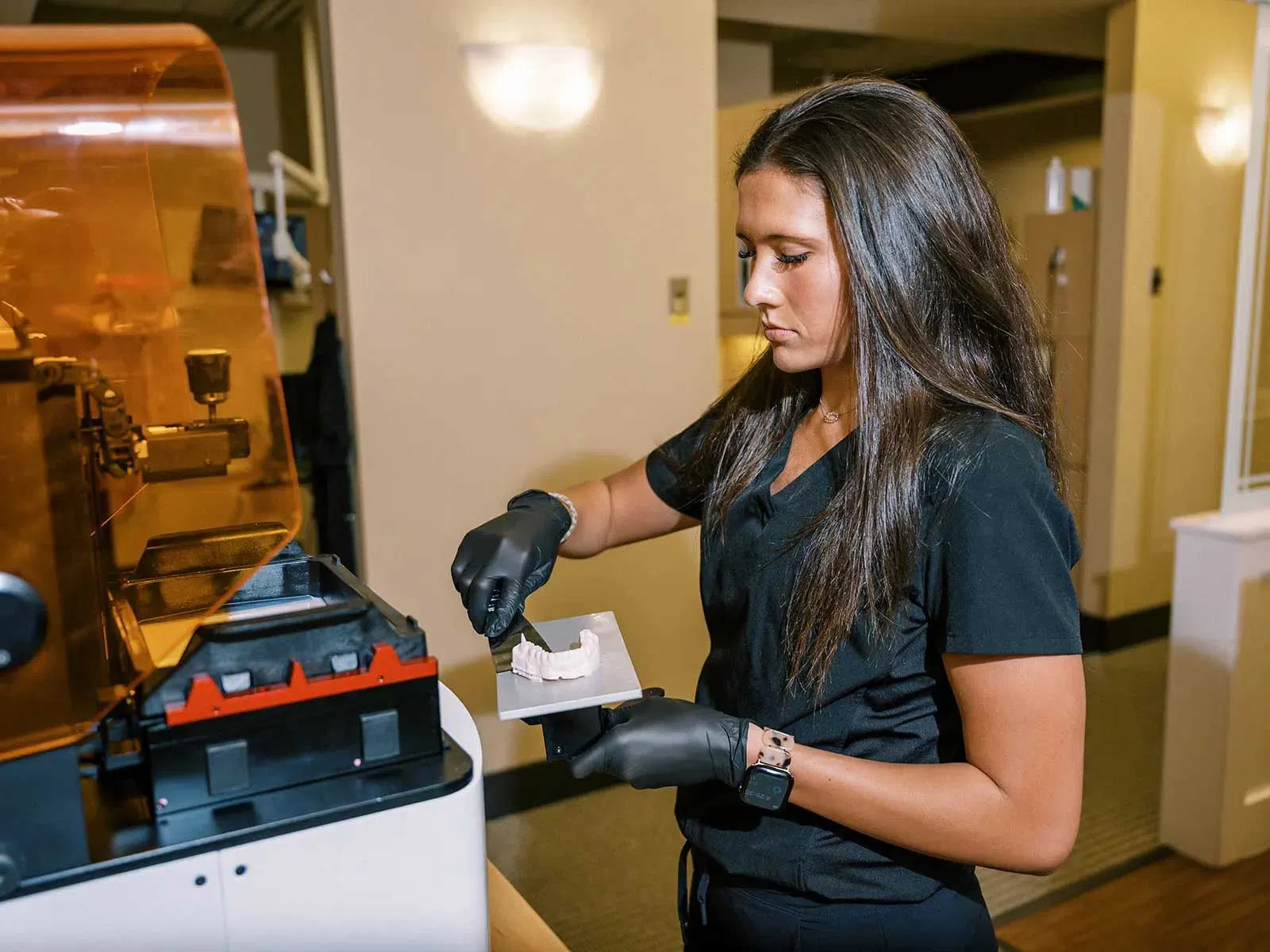
Digital scanning captures detailed information about your teeth without using messy molds. When three-dimensional information is needed, CBCT imaging can provide views of the teeth, jawbone, and surrounding structures. Digital wax-ups and 3-D printing can also help your dentists visualize and plan restorative cases before treatment begins. These capabilities are particularly valuable when care involves multiple teeth or several stages.
Technology is only part of the planning process. Your dentist will discuss what needs attention, which treatments may be appropriate, and how different procedures can work together. For complex implant cases, Law Family & Cosmetic Dentistry can also collaborate with local surgical professionals when necessary while remaining involved in the restorative portion of your care.
Your comfort is always considered along with your restorative needs. Nitrous oxide sedation is available to help you relax. Pillows, blankets, and a calm, supportive approach can make longer or more involved visits feel more manageable.
Schedule an appointment at Law Family & Cosmetic Dentistry to meet with a restorative dentist in Knoxville.
Frequently Asked Questions About Restorative Dentistry
Q What is restorative dentistry?
Restorative dentistry repairs or replaces teeth affected by decay, damage, wear, or tooth loss. Treatments can range from fillings and crowns to bridges, dentures, and dental implants, depending on the condition of the smile.
Q How do I know if I need restorative dental treatment?
You may need restorative dental treatment if you have a cavity, cracked or broken tooth, failing restoration, missing tooth, or difficulty chewing comfortably. A dental exam can identify the problem and determine which treatment options are appropriate.
Q What is the difference between a filling and a dental crown?
A filling repairs a smaller area of damaged or decayed tooth structure, while a dental crown covers and protects more of the tooth. The amount and location of damage help determine which restoration is appropriate.
Q What are my options for replacing missing teeth?
Options for replacing missing teeth can include dental bridges, dental implants, partial dentures, or full dentures. The number and location of missing teeth, oral health, bone support, and personal preferences can all influence the treatment recommendation.
Q Can restorative dentistry improve the appearance of my smile?
Q What is a full-mouth reconstruction?
A full-mouth reconstruction combines multiple restorative treatments to address widespread dental problems. The treatment plan is individualized and may include crowns, bridges, dental implants, dentures, or other procedures based on the patient's needs.
Q How long do dental restorations last?
The lifespan of a dental restoration varies based on the type of treatment, materials, location in the mouth, oral habits, and daily care. Good oral hygiene and regular dental visits can help patients protect restorations and identify problems early.
Q Can dental anxiety be managed during restorative treatment?
Dental anxiety can be managed during restorative treatment through clear communication, a supportive environment, comfort measures, and sedation when appropriate. Patients who feel nervous about treatment should discuss their concerns with their dental team before the procedure.